

In episode 7 of the first season of the Danish political drama series Borgen, the hotshot young news reporter is having dinner with her salt-of-the-earth personal trainer boyfriend. She discovers that he doesn’t know who the minister of justice is, which angers her. He points out that she doesn’t know much about anaerobic metabolism or amino acids, and questions why her world is more important than his. She gets even angrier, and finally reveals the contempt she feels for him and his ignorance of politics. He gets up and leaves – forever.
The scene highlights something many people in politics and media feel – a strong sense that what they do is important. More important than what other people do. Sometimes this feeling of self-importance turns into narcissistic anger at those who do not care, and they are blamed for whatever ails the country. The personal trainer boyfriend isn’t the only one who doesn’t know who the minister of justice is – most likely he is with the majority.
Politics is important, no doubt about it. But it is not the only thing that is important. And while it would certainly be good if voters knew more about politics, such knowledge would only come at a price. Knowledge isn’t free, and every minute spent on politics is a minute that won’t be spent on anaerobic metabolism, amino acids, French literature, working, jiu-jitsu, plumbing or just enjoying life in the company of friends and family.
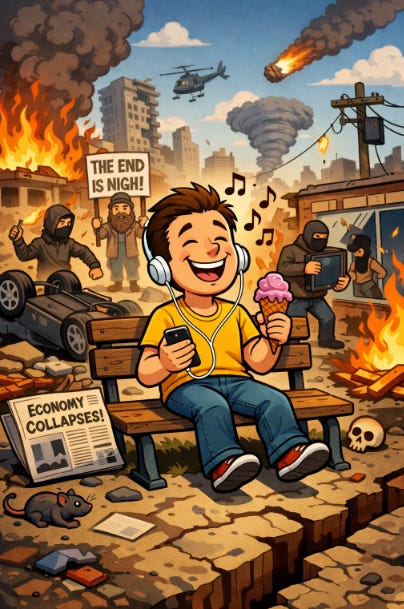
Therefore, political ignorance is a good sign. An important distinction is between good as a symptom, and good as a cause. Ignorance is rarely good, but the fact that people can survive without knowing much about politics is a sign that the political system works well. It is good that society is so calm that it doesn’t matter to most people who the minister of justice is. Instead, they can live their lives.
This, people getting to live their lives, is the point of a free society. The opposite is the totalitarian society, which Mussolini famously explained as “All within the state, nothing outside the state, nothing against the state”. In other words, a country where politics is everything, where the public sphere (the state) has grown too large and swallowed the private sphere (the society). Freedom begins where politics ends.
But at the same time, a country won’t work well if nobody cares enough about it to take an interest. Widespread ignorance may be a sign that politics works well – but we shouldn’t expect that to last long.
This effect explains why democracies always seem to totter on the edge of the abyss, but never quite fall over it. When things are good people stop paying attention and things turn bad. When things turn bad, people start paying attention and things turn good. This is an example of a “negative feedback loop” – change causes something that prevents further change, maintaining stability.
Freedom is the goal of politics. Or at least it ought to be. This is what allows people to follow their own goals and dreams in service to themselves and each other. The goal of politics is to minimize itself. Political ignorance suggests that the goal is being achieved – hopefully at a sustainable level.
Jakob Sjölander